
When you’re planning a long road trip with the Trek Horizon, you probably think about fuel stops, campsites, road conditions and what needs to be packed. How toll gates work isn’t usually high on the list – until you approach the first one and wonder whether having a trailer behind you changes everything.
The good news is that the Trek Horizon has been designed as a lightweight, compact adventure trailer. With a tare of 370 kg, GVM of 750 kg and a braked axle, it is very different from towing a large caravan or heavy trailer. Those specifications don’t just matter on the open road, they’re useful to understand in knowing how toll gates work and planning toll routes too.
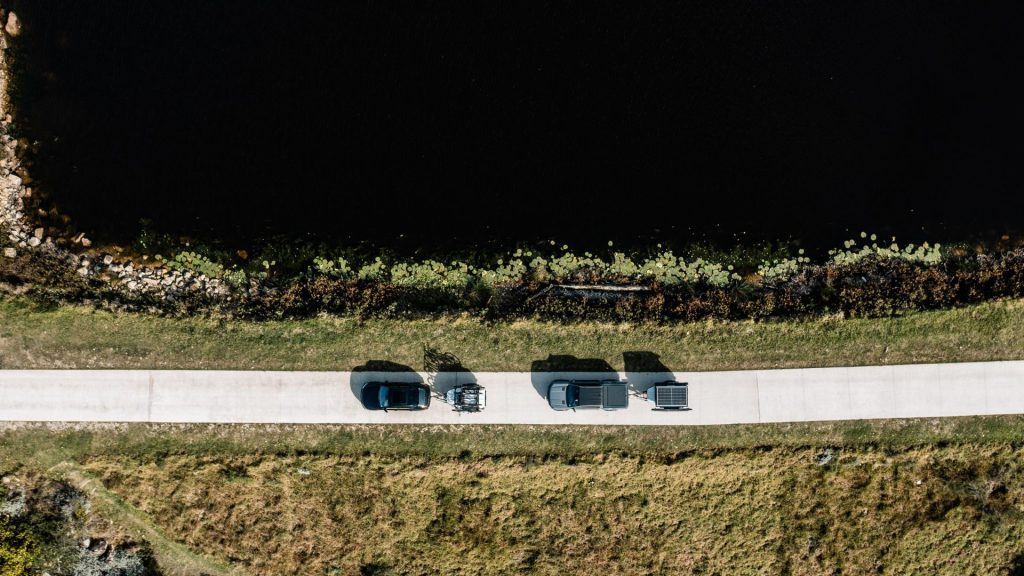
A 750 kg GVM Makes a Big Difference
One of the most important Trek Horizon specifications is its 750 kg GVM (Gross Vehicle Mass). The Horizon itself has a tare of just 370 kg, giving it a payload of approximately 380 kg up to its stated GVM.
Why does that matter at a toll gate?
SANRAL’s published classification information provides for a light vehicle towing a caravan or trailer where the trailer’s GVM is below 3.5 tonnes. The Trek Horizon’s 750 kg GVM sits well below that threshold.
That doesn’t mean you should assume every toll road or every country uses identical classification rules, but it does demonstrate just how far removed the Horizon is from the heavy trailers and commercial combinations many people picture when they think about towing.
Compact Enough for the Journey, Big Enough for the Adventure
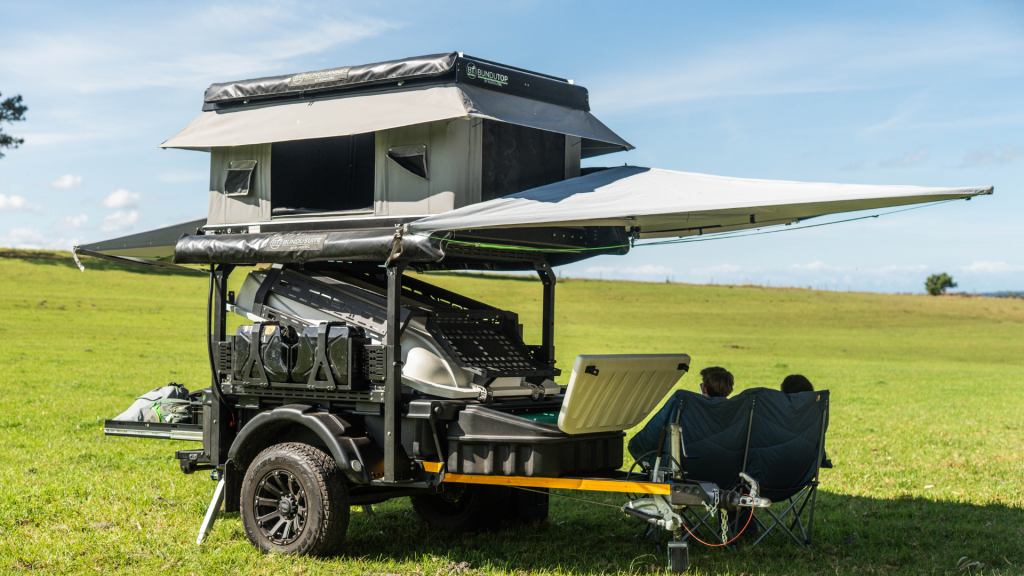
The Horizon measures approximately 3,556 mm long, 1,777 mm wide and 1,500 mm high, with a 1,500 mm drawbar. These are useful numbers to know before any long-distance trip, particularly when you’re planning toll roads, border crossings, ferries or other routes where vehicle dimensions may be relevant.
What makes those dimensions particularly clever is what Trek has managed to fit into them. The Horizon offers around 1,550 litres of secure, waterproof and dust-proof storage, so you’re getting serious packing capacity without towing an enormous trailer behind you.
That means camping equipment, clothing, food and adventure gear can travel in the Horizon instead of being piled into your vehicle. When you’ve still got another six hours of driving after the toll gate, having a comfortable car rather than one packed to the roof makes a considerable difference.
Just Another Part of Travelling with the Horizon
Once you’ve driven through a few toll gates with the Trek Horizon behind you, you’ll probably wonder why you ever gave them much thought. Know your vehicle and trailer specifications, check your route, budget for the current toll fees and take a little extra care when moving through the plaza.
Then get back to the important part: deciding where Trek is taking you next.
The Horizon’s 370 kg tare, 750 kg GVM and compact design make it a practical companion for long-distance travel, whether you’re heading across South Africa for a weekend escape or beginning a much bigger African adventure.
Toll gates are simply another small part of the road between you and the next campsite.
Toll Gate Ahead? Keep Trekking
The Trek Horizon was designed to give adventurers plenty of capability without requiring an unnecessarily large or heavy trailer.
So when the toll plaza appears on your next Trek adventure, there’s no need to wonder whether having the Horizon behind you suddenly makes you a truck.
Know your specifications, check the current toll classification for your route, budget for the applicable fees and drive through with confidence.
After all, the toll gate isn’t the destination. It’s just another few metres of road between you, the Trek Horizon and wherever you’re camping tonight.